I just watched Joker: Folie à Deux. Despite the musical scenes and elements (not really my thing), I really enjoyed it. Here are some observations and comments.
SPOILER ALERT
The film emphasizes how people perceive you as they wish, and how society quickly rejects you if you don’t meet its expectations. Arthur’s lawyer and Harley Quinn (Lee) want him to be something he’s not – The Joker. Both of these women try to manipulate Arthur for their own interests. The lawyer insists Arthur developed a split personality to prove his innocence and advance her career; Lee speaks to his alter-ego to live out her own twisted fantasy. Are these characters extensions of Arthur’s mother, who also didn’t accept him for who he was, as shown by her calling him “happy”? Harvey Dent, the prosecuter, sees him as a monster. But is he?
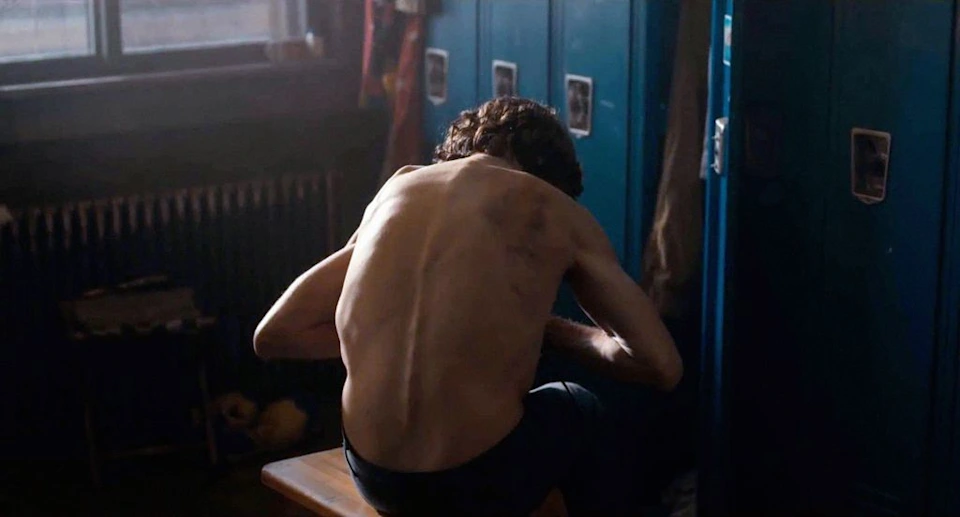
All Arthur desires is connection, love, acceptance, to be valued for who he is. Don’t we all? Yet, he is profoundly emotionally wounded, not shaped for society and its demands, making rejection easy. The film depicts Arthur as essentially weak, unable to embody his clown alter-ego and lacking control over his life. He is not The Joker, the strong persona who “can do anything”; this persona cannot shield him from the world’s cruelties. This is shown by his humiliation and dehumanization by the prison guards who sodomize him after his theatrical Joker performance in court. Furthermore, when he hears his prison mate being strangled, it seems he experiences a PTSD episode, reminding him of severe childhood trauma. He is so traumatized that he often retreats into an inner world where he feels safe and in control.
A meta-layer?
Interestingly, the film itself seems to be rejected by many in the audience (receiving bad-to-mixed reviews), perhaps because they expected something different. Perhaps they anticipated The Joker, chaos, violence, and mayhem – to be ENTERTAINED – not to witness an exploration of a broken, fragile, unwanted human being. As Arthur says at one point, “I got this sneaking suspicion that we’re not giving the people what they want.” How meta. The ending line, just before Arthur is stabbed in the gut, can also be interpreted on a meta-level: “You get what you deserve!”
*
I read or heard before watching the film that psychological explorations of tormented killers, like Fleck or Dahmer (real), are misguided because these individuals are innately evil, implying that we should not sympathise with them. I couldn’t disagree more. We can attempt to understand the inner workings of killers while still holding them legally and morally accountable for their actions. Even if a person is deemed evil, they didn’t choose to be so. Nobody chooses their genes, pre- and post-natal environment, parents, society, and culture. I would rather live in a society that shows empathy towards individuals who are victims of fate than one that sees the world in absolutes, in simple good and evil categories, thereby increasing the risk of dehumanization and mass atrocities.
I see some parallels between Frankenstein’s monster and The Joker: Mary Shelley’s “Frankenstein” and The Joker share an intriguing exploration of the Monster’s subjectivity. In Shelley’s novel, the creature is a complex being seeking understanding and acceptance, grappling with its own identity and the rejection from society. Similarly, the Joker often represents chaos and madness, yet beneath the surface lies a deeper commentary on the nature of humanity and what it means to be seen as a monster.
Leave a Reply