Blog

  • Reflections on Rashid Khalidi’s The Hundred Years’ War on Palestine

    “The terms ‘settler’ and ‘pioneer’ have positive connotations in American history, arising from the heroic tale of the conquest of the West at the expense of its indigenous population as projected in movies, literature, and television. Indeed, there are striking parallels between these portrayals of the resistance of Native Americans to their dispossession and that of the Palestinians. Both groups are cast as backward and uncivilized, a violent, murderous, and irrational obstacle to progress and modernity.”

    Rashid Khalidi, The Hundred Years’ War on Palestine, p. 241

    I just finished reading Rashid Khalidi’s The Hundred Years’ War on Palestine, and I want to share a few thoughts about the book.
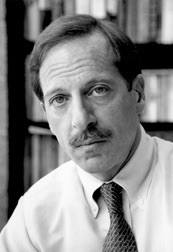

    Rashid Khalidi, 1999. Photograph by Bruce Powell. University of Chicago Photographic Archive, apf1-10227, Hanna Holborn Gray Special Collections Research Center, University of Chicago Library. Original photograph.

    Understanding the conflict through settler colonialism

    What I particularly like is the main perspective from which Khalidi analyses the conflict between Palestinians and Israelis. His central argument is that the conflict should be understood as one of settler colonialism, with the Zionist movement, and later Israel, as the colonising power and the Palestinians as the colonised people. Having read this book and others, and listened to numerous debates on the subject, I find it increasingly difficult to argue against this perspective.

    One common counterargument from the pro-Israel camp is that the land fundamentally belongs to the Jews because it is their ancestral homeland or because it was promised to them by God. The religious justification is, in my view, completely absurd in the context of modern international law. The ancestral argument is also problematic. I don’t dispute the historical Jewish connection to the land, but how far back in history must we go to determine who has a legitimate claim to a particular territory? Such arguments seem rather arbitrary to me. What is not arbitrary is that when the Zionist movement began encouraging large-scale Jewish immigration and settlement in Palestine, particularly after World War I, there was already an indigenous population living there, predominantly Palestinian Arabs. Whatever historical connections another people might have to that territory, these cannot simply override the rights of those already living there.

    Another common argument is that there was no Palestinian state, no Palestinian nation, or sometimes even that the Palestinian people did not exist as a distinct people. I find this argument equally unconvincing. There was clearly an indigenous population in Palestine, with its own communities, traditions and social institutions, as well as an emerging Palestinian national identity alongside a broader Arab identity. And even if Palestinian national identity developed relatively recently, so what? Modern national identities and nation-states are historical and political constructions. Israel itself is a modern state. The fact that a particular national identity did not exist in its present form centuries ago does not make it illegitimate.

    Consider European colonisation of North America. Indigenous peoples did not necessarily organise themselves into nation-states in the modern European sense, but that hardly gave European settlers the right to take their land, displace them or dominate them. The same principle applies to Palestine. The absence of an independent Palestinian nation-state before the arrival of the Zionist movement does not somehow invalidate the rights of the people who lived there.

    Another crucial point supporting the colonial perspective is that several leading Zionists openly contemplated the exclusion, displacement or domination of the indigenous Palestinian population to make a Jewish state possible. Khalidi documents this extensively. Theodor Herzl, one of the founders of political Zionism, wrote in his diary in 1895 about the need to discreetly expropriate property and move the poorer population across the border. Similarly, Chaim Weizmann, who would later become Israel’s first president, described in 1914 how early Zionists had conceived of Palestine as “a country without a people”. Although this was not necessarily intended as a literal demographic description, it illustrates how easily the existing population could be disregarded in Zionist thinking.

    Of course, Zionism was never a completely uniform movement, and there were disagreements among Zionists about how to approach the Arab population and what kind of political arrangement should emerge. But the fact remains that influential figures within the movement advocated policies that would exclude or subordinate the indigenous population. In the decades leading up to 1948, Jewish settlement and land acquisition, accompanied by exclusionary policies, contributed to growing tensions, eventually culminating in the mass displacement of Palestinians during the 1948 war. The British Empire played a crucial role in facilitating the Zionist project, particularly through the Balfour Declaration and its subsequent administration of Palestine. This is one of Khalidi’s central arguments: the colonisation of Palestine was not simply the work of the Zionist movement acting alone, but was supported by some of the most powerful states in the world.

    What happened before May 1948

    Something else I learned from the book, which somewhat surprised me, was the scale of violence and displacement inflicted upon Palestinians just before Israel declared independence in May 1948 and the neighbouring Arab states entered the war. After the UN partition resolution of November 1947, armed conflict broke out between Jewish and Arab communities in Mandatory Palestine, with attacks by armed groups on both sides. In the spring of 1948, Zionist forces launched major offensives and captured numerous Palestinian towns and villages. Khalidi connects these operations to Plan Dalet (Plan D), adopted by the Haganah in March 1948, and describes the resulting campaign as one of conquest and depopulation. Historians disagree about whether Plan Dalet itself constituted a comprehensive plan for expulsion, but the military offensives and large-scale Palestinian displacement are well documented.

    Khalidi provides a striking chronology: Tiberias fell on 18 April, Haifa on 23 April, Safad on 10 May, and Beisan (Beit She’an) on 11 May 1948. Arab neighbourhoods of West Jerusalem and many other towns and villages were also depopulated. Jaffa was besieged and heavily bombarded in late April and surrendered on 13 May, after most of its roughly 60,000 Arab residents had fled or been displaced. This is especially significant because the UN partition plan had designated Jaffa as part of the proposed Arab state. The massacre at Deir Yassin on 9 April, carried out by Zionist paramilitary groups, also spread fear among Palestinian communities. According to Khalidi, approximately 300,000 Palestinians had already been displaced by Israel’s declaration of independence on 14 May — before the neighbouring Arab states entered the war.

    I find this particularly important because of another familiar narrative, often presented by supporters of Israel: that the United Nations established a Jewish state through General Assembly Resolution 181, that the Arab states refused to accept it, and that they subsequently attacked the newly created Israel. The implication is that Israel was simply an innocent victim defending itself against hostile neighbours. But this is a remarkably selective account of what happened. First of all, Resolution 181 recommended the partition of Palestine into a Jewish state and an Arab state; it did not itself establish Israel. More importantly, this narrative largely ignores the preceding decades of Zionist settlement, the political and territorial transformation of Palestine, and the displacement of Palestinians that was already taking place before the Arab armies intervened. There had indeed been violence on both sides during the civil war that began in late 1947, including attacks by Arab armed groups against Jewish communities. But that does not change the fact that hundreds of thousands of Palestinians had already lost their homes before the interstate war began. The Nakba did not simply begin as a consequence of the invasion by neighbouring Arab states. It was already well under way. Leaving this out gives a deeply misleading impression of the historical sequence of events.

    These are, to me, some of the strongest reasons for understanding the conflict through the lens of settler colonialism. It is not about denying Jewish historical connections to the land, nor about denying the persecution of Jews in Europe, which helped give rise to Zionism. It is about recognising that the creation of a Jewish homeland and eventually a Jewish state took place in a territory already inhabited by another people, whose rights, aspirations and political independence were repeatedly disregarded.

    This history of displacement before May 1948 also brings to mind a striking passage by Benny Morris, an Israeli historian associated with the “New Historians”, who challenged established accounts of the 1948 war by examining archival evidence. In the conclusion to The Birth of the Palestinian Refugee Problem Revisited, Morris writes:

    “But the displacement of Arabs from Palestine or from the areas of Palestine that would become the Jewish State was inherent in Zionist ideology and, in microcosm, in Zionist praxis from the start of the enterprise. The piecemeal eviction of tenant farmers, albeit in relatively small numbers, during the first five decades of Zionist land purchase and settlement naturally stemmed from, and in a sense hinted at, the underlying thrust of the ideology, which was to turn an Arab-populated land into a State with an overwhelming Jewish majority. And the Zionist leaders’ thinking about, and periodic endorsement of, ‘transfer’ during those decades – voluntary and agreed, if possible, but coerced if not – readied hearts and minds for the denouement of 1948 and its immediate aftermath, in which some 700,000 Arabs were displaced from their homes (though the majority remained in Palestine).”

    Benny Morris, The Birth of the Palestinian Refugee Problem Revisited (2004), Conclusion, p. 588.

    What surprises me about this passage is that Morris is an Israeli Jewish historian whom I have watched in contemporary debates defending Israel very strongly—sometimes, in my view, with considerable bias. Yet here he acknowledges something deeply uncomfortable for the conventional pro-Israel narrative: that the displacement of Palestinians was not merely an unforeseen consequence of the 1948 war, but was connected to Zionism’s aim of creating an overwhelmingly Jewish state in a land already populated predominantly by Arabs. This strikes me as a remarkably critical, almost colonial framing of Zionism, especially coming from Morris. Of course, he does not embrace all of Khalidi’s interpretation, and he rejects the idea that there was a single, agreed Zionist plan for mass expulsion before the war. Nevertheless, I find his acknowledgment striking.

    Khalidi’s criticism of Palestinian leadership

    Another thing I appreciate about Khalidi’s book is that, despite its strong focus on the plight of the Palestinians, which I think is entirely justified, it does not shy away from criticising Palestinian political leadership. Khalidi is critical of the PLO and its many strategic failures, but he also criticises Hamas and other Palestinian groups for their violent tactics, particularly attacks against civilians. Beyond the obvious moral and legal problems with such tactics, Khalidi argues that they have often been strategically counterproductive. Rather than advancing the Palestinian cause, attacks on Israeli civilians have tended to strengthen hard-line political forces within Israel, unite Israeli society against the Palestinians and undermine international sympathy for their struggle. In other words, these tactics have often weakened the very cause they were supposedly intended to advance.

    I think this is an important dimension of the book. One can recognise the profound injustices inflicted upon the Palestinians while also being critical of how their political leaders and armed movements have responded to those injustices.

    One reservation about the book

    One limitation of the book, for me, is that Khalidi gives relatively little space to the experiences of Jewish communities and Israelis, including the violence and attacks against Jewish civilians before, during and after the 1947–48 civil war. I would have liked to hear more of those voices, and to understand more fully the fear and insecurity that such experiences produced. They are an important part of the history, even if they do not, in my view, invalidate Khalidi’s central argument.

    At the same time, I understand why Khalidi made this choice. His purpose is precisely to tell the history from a Palestinian perspective, one that has often been marginalised or overshadowed in mainstream Western accounts of the conflict. However, it would be inaccurate to say Palestinians had no voice at all; Palestinian historians, writers and political figures have been telling their stories for decades. But those accounts have often received far less international attention than Israeli narratives. So I appreciate the book’s deliberate focus. Still, I think giving somewhat more attention to the suffering of Jewish civilians, and how it shaped Israeli attitudes, would have made an already valuable book more complete.

    Sources

    Rashid Khalidi, The Hundred Years’ War on Palestine: A History of Settler Colonialism and Resistance, 1917–2017 (2020); Khalidi, “The Palestinians and 1948: The Underlying Causes of Failure”; and UN General Assembly Resolution 181 (II); Benny Morris, The Birth of the Palestinian Refugee Problem Revisited (Cambridge University Press, 2004), Conclusion, p. 588. Historical photographs: Matson Collection, Library of Congress, linked in captions above.


  • HEAT: A Framework for Evaluating Psychological Theories

    Psychological theories are not simply collections of ideas. They aim to explain behavior and mental processes, and they should generate predictions that can be tested against evidence.

    The HEAT framework reduces theory evaluation to four broad questions with related sub-questions.

    • H – Holistic or reductionistic
    • E – Evidence
    • A – Applicability
    • T – Theory limits and strengths

    The purpose is not to decide whether a theory is simply “good” or “bad.” Instead, HEAT helps us identify what a theory explains well, what supports it, what it can be used for, and where its limits may lie.

    H – Holistic or reductionistic

    Question: How broad is the theory’s explanation of behavior?

    A reductionistic theory explains behavior using a relatively small number of processes or causes. A more holistic theory considers several different factors and how they interact.

    Neither is automatically better. Reductionistic theories can be clear, precise, and relatively easy to test. However, they may oversimplify behavior by leaving out important influences. More holistic theories may provide a fuller explanation, but they can also become more complex and difficult to test.

    Example: Behaviorist theories vs. Social Cognitive Theory

    Behaviorist theories such as operant conditioning are relatively reductionistic because they explain learning mainly through environmental factors such as reinforcement and punishment. They give zero attention to internal mental processes and biological influences.

    Bandura’s Social Cognitive Theory is more holistic. It includes both external influences and internal factors such as motivation and self-efficacy. Behavior, cognition, and the environment are seen as influencing one another. However, the theory still does not incorporate every possible biological, cultural, or unconscious influence on behavior. Furthermore, since the theory has many interacting parts, it can be challenging to test certain aspects of it.

    E – Evidence

    Question: How strong is the empirical evidence supporting the theory?

    • Is there research that supports hypotheses/predictions derived from the theory?
    • What is the quality of the supporting research? Does it have strong internal validity or credibility? For example, is it relatively free from researcher bias?
    • What type of evidence supports it: causal research, correlational research, or both? Quantitative and/or qualitative?
    • Are the predictions reliable? In other words, are they supported consistently across studies and replications?
    • Do the measures used in the research have good construct validity? What about test-retest reliability?
    • Does the supporting evidence have good population validity? Can the findings be generalized beyond the particular samples that were studied?

    A theory becomes more convincing when predictions derived from it repeatedly receive support from high-quality research using valid measures and relevant populations.

    Example: Strong and weak empirical support

    Classical conditioning has extensive empirical support. Researchers have repeatedly demonstrated that both animals and humans can learn associations between stimuli, and many predictions derived from conditioning theory have been reproduced under controlled conditions.

    By contrast, several claims within Freud’s psychoanalytic theory have much weaker empirical support. Many of Freud’s original claims were based heavily on questionable qualitative clinical observations with strong reasons to assume the presence of researcher bias. Furthermore, there is a lack of rigorous experimental data. A heavily controversial idea is repression.

    Construct validity example

    Psychological theories often contain constructs that cannot be observed directly. Researchers therefore have to operationalize them through measurable indicators such as questionnaire responses, interviews, behavior, or physiological measures.

    • Do the measures used in research actually represent the theoretical construct they are supposed to measure?
    • Are different ways of measuring the construct reasonably consistent with one another?

    Example: Why an internal working model is harder to measure than self-esteem or self-efficacy

    All three are psychological constructs, which means that none of them can be observed directly. Researchers always have to infer them from something measurable, such as questionnaire answers, interviews, or behavior.

    The difference is how directly and clearly the construct can be operationalized. Self-esteem and self-efficacy are relatively close to conscious beliefs that people can report about themselves. For example, a researcher can ask participants to rate statements such as “I feel confident that I can succeed at this task.” Several similar items can then be combined into a scale.

    An internal working model is more difficult. In attachment theory, it refers to an underlying mental representation of the self, other people, and relationships. Aspects of the model are believed not to be fully accessible to conscious self-report, and there is no single obvious question that directly measures it. Researchers therefore have to infer it from patterns in interviews, questionnaires, narratives, expectations, or behavior.

    This creates a greater construct-validity challenge: more theoretical assumptions are needed to move from the observed data to the underlying construct, and different measures may capture different parts of the internal working model. The problem is therefore not that the internal working model is “invisible” while self-esteem is not. Both are invisible constructs. The internal working model is simply less directly and less uniformly operationalized.

    More on internal working model

    “A central tenet of attachment theory (Bowlby, 1969, 1973) is that people develop mental representations, or internal working models, that consist of expectations about the self, significant others, and the relationship between the two. Working models are thought to include specific content about attachment figures and the self that is stored within a well-organized representational structure (Bowlby, 1980; Bremerton, 1985,1990; Collins & Read, 1994). Furthermore, their content is believed to include knowledge about the details (e.g., what happened, where, and with whom) of interpersonal experiences as well as the affect (e.g., happiness, fear, and anger) associated with those experiences (Bretherton, 1985). Working models also are assumed to involve processes that influence what information individuals attend to, how they interpret events in their world, and what they remember. Furthermore, these processes are hypothesized to operate primarily outside of conscious awareness (Bowlby, 1980; Bretherton, 1985, 1990; Main, Kaplan, & Cassidy, 1985)

    Sampling bias and population validity example

    The evidence supporting a theory may come from a narrow population.

    • Who has actually been studied?
    • Are the samples representative?
    • Can the findings be generalized to other populations, cultures, age groups, or social backgrounds?

    Example: Freud and population validity

    Freud developed many of his ideas from a relatively small number of clinical case studies, largely involving patients from a narrow social and cultural setting in Vienna.

    This raises questions about population validity. Even if his observations accurately described those individuals, it is difficult to know whether the same conclusions apply to people from very different cultures, social groups, ages, or historical periods.

    A – Applicability (practical)

    Question: What can the theory be used for?

    • Can the theory be applied to real-world situations and problems?
    • Has the theory advanced science and knowledge?
    • Has it led to more research?

    A psychological theory may have practical value if its principles can be applied to real-world problems. Applications might be found in education, therapy, health, parenting, organizations, sport, or behavior change.

    Example of broad application: Operant conditioning

    Operant conditioning has considerable practical applicability. Principles of reinforcement have been used in education, parenting, behavioral interventions, animal training.

    For example, a teacher may use praise or another form of reinforcement to increase desirable classroom behavior. The theory therefore provides principles that can be translated into practical interventions.

    Example of narrow application: James–Lange theory of emotion

    Emotional experience results from our perception of bodily changes produced in response to an emotional stimulus.

    The theory has been important for understanding the relationship between bodily responses and emotion, but it was primarily developed as an explanation of how emotions arise rather than as a framework for practical intervention. Unlike theories such as operant conditioning, it has relatively few direct applications in areas such as education, therapy, or behavior change.

    T – Theory limits and strengths

    Question: How strong is the theory as an explanation, independently of the quality of the studies used to test it?

    Here the focus is on the theory itself, rather than on the evidence supporting it. Students can consider whether the theory is clearly formulated, whether it makes sufficiently precise and testable claims, and how wide a range of phenomena it attempts to explain.

    Conceptual clarity

    • Are the theory’s key concepts and proposed mechanisms clearly defined?
    • Is it clear how the different parts of the theory are supposed to relate to one another?

    Testability and precision

    • Does the theory generate clear predictions that can be tested?
    • Could evidence potentially show the theory to be wrong, that is, is it falsifiable?

    Scope or comprehensiveness

    Scope refers to the range of phenomena a theory aims to explain. A theory with broad scope tries to explain many different behaviors or findings using the same basic principles, whereas a theory with narrow scope is designed to explain few observations.

    Keep in mind that a theory can attempt to explain many different phenomena but only actually manage to explain a few observations.

    Furthermore, scope is different from being holistic or reductionistic. Holistic vs. reductionistic concerns how many different kinds of causes or influences a theory includes. Scope concerns how many different phenomena the theory can explain.

    Example: Broad vs. narrow scope

    Operant conditioning has relatively broad scope. Its basic principles, such as reinforcement, punishment, and extinction, have been used to explain many different learned behaviors across a wide range of contexts.

    James–Lange theory of emotion has relatively narrow scope. It is mainly designed to explain how emotional experience arises in relation to bodily responses. It does not attempt to explain learning, memory, prejudice, attachment, or most other areas of psychology.

    This illustrates why scope and reductionism are different: operant conditioning can be relatively reductionistic in the causes it emphasizes while still having broad scope in the range of behaviors it can explain.

    Kenneth Cramer on Freud

    ”Comprehensive theories encompass a greater scope or range of explanation for various phenomena. Whereas some theories may be narrow in focus (explaining a limited number of observations, e.g., the facial feedback theory of emotion, Andréasson & Dimberg, 2008), other theories may cast a greater net over a wider range of phenomena (e.g., Evolutionary Theory).

    Freud’s Psychodynamic Theory is likely the most comprehensive personality system ever devised (Hergenhahn, Olson, & Cramer, 2003), explaining love and war, marriage and religion, normal and abnormal development, humor, incest, slips of the tongue—the list is endless.

    Given that good theories should describe, explain, predict, and control phenomena and behavior, comprehensive theories aim to accomplish all these goals.” (Cramer, K. M. (2013). Six criteria of a viable theory: Putting reversal theory to the test. Journal of Motivation Emotion and Personality Reversal Theory Studies, 1. https://doi.org/10.12689/jmep.2013.102)

    The HEAT questions

    When evaluating a psychological theory, students can ask four broad questions:

    • H – Holistic or reductionistic? How broad or narrow is the explanation?
    • E – Evidence. How strong, valid, reliable, and generalizable is the research supporting the theory?
    • A – Applicability. What can the theory be used for?
    • T – Theory limits and strengths. Are its concepts clear, are its claims testable and precise, and how broad is its scope?

    HEAT gives students a manageable structure while still covering some of the central questions involved in evaluating psychological theories.

  • Statistical Significance and Causal Inference

    Psychology Research Methods · How p-values and internal validity answer different questions

    CORE RULE

    The p-value helps us judge whether an observed effect is unlikely to be random variation. Internal validity helps us judge whether the IV caused that effect.

    Two questions, not one

    Question 1: Is there evidence of an effect? Statistical significance addresses whether the observed difference would be unusual if the null hypothesis were true.

    Question 2: What caused the effect? Internal validity addresses whether the IV is the best explanation for the observed change in the DV, rather than a confound, which is a systematic influence.

    Example 1 — Significant result + strong internal validity

    Students are randomly assigned to two groups. Group A drinks coffee; Group B drinks no coffee. Both groups then complete the same reaction-time test under standardized conditions.

    Result: p = .01. The difference is statistically significant for a P-value threshold of .05. Because the experiment is also well controlled and uses random allocation, there is good reason to attribute the difference to caffeine.

    Example 2 — Significant result + confound

    Two classes are compared. Class A receives a new teaching method; Class B receives the usual method. Class A scores significantly higher on the final test. However, Class A also has a more experienced teacher and because the classes are pre-existing, Class A also happens to be systematically more intelligent than class B.

    Result: p = .01. The difference is statistically significant, but the causal conclusion is uncertain. Teacher experience and intelligence are confounding variables and provide alternative explanations for the difference.

    A significant result can still come from a study with weak internal validity.

    Example 3 — Non-significant result

    Participants are randomly assigned to a new memory technique or a control condition. The treatment group scores slightly higher, but the difference is not statistically significant.

    Result: p = .32. We do not have strong statistical evidence that an effect exists. Therefore, we should not conclude that the memory technique caused an improvement.

    A simple decision sequence

    1. Is there evidence of an effect? Look at statistical significance.

    2. If there is an effect, what caused it? Evaluate internal validity.

    The intuition behind a low p-value

    A useful beginner-level intuition is that a low p-value suggests that the observed pattern is difficult to explain as random noise alone. It does not identify the cause of the pattern. Something systematic may be producing the difference, but that systematic influence could be the IV or a confounding variable, or a combination.

    SIGNIFICANCE
    Is the pattern more than random noise?

    INTERNAL VALIDITY
    Can we attribute the pattern to the IV?

    Technical note

    Strictly speaking, p < .05 does not mean that there is less than a 5% probability that the result is due to chance, nor does it mean there is a 95% probability that the IV caused the DV. A p-value is calculated under the assumption that the null hypothesis is true: it describes how unusual the observed result, or a more extreme one, would be under that assumption.

  • Højrefløjens skrækfantasier om DEI

    Højrefløjens skrækfantasier om DEI

    Source: https://indivisible-ma.org/dei-what-it-is-why-its-important-and-what-you-can-do-to-support-it/

    Internettet har mistet forstanden. Igen.

    Christopher Nolans filmatisering af Odysséen har fået tastaturkrigerne op fra sofaerne. Lupita Nyong’o i rollen som Helena af Troja og Elliot Page i rollen som Sinon har udløst en shitstorm af episke proportioner.

    Friske beskyldninger om, at wokeness endnu en gang har korrumperet Hollywood. Hvordan kunne Nolan dog vælge en sort kvinde til rollen som Helena? Og hvorfor caste en transmand som Sinon? Barske kommentarer møntet på udseende og seksualitet, for eksempel ”a mutilated, mentally ill woman cosplaying as a man” er talrige på de sociale medier.

    Denne form for negativ reception er efterhånden meget forudsigelig, trist og udmattende. Ikke fordi man ikke må diskutere kunstneriske valg eller quasi-historisk autenticitet. Men fordi debatten hurtigt degenererer til kulturkamp, mobning og moralsk hysteri.

    Kritikken af Nolans nyeste film handler om noget langt større: nemlig wokeness og politisk korrekthed, meritokrati og DEI, der står for diversity, equity and inclusion. DEI, der ofte forbindes med den bredere idé om wokeness, er et sæt af værdier og metoder, som har til formål at skabe retfærdige ansættelses- og arbejdsvilkår uanset hvem man er. Formålet er at udvide gruppen af mennesker, man leder efter talent blandt, uden at sænke kravene til kompetencer.

    Anklagerne mod filmen illustrerer tre antagelser, som fylder særligt meget på dele af højrefløjen: For det første en frygt for, at DEI undergraver meritokratiet. For det andet, en idealiseret forestilling om meritokrati. For det tredje, at når man ser en minoritet i en prestigefyldt stilling eller filmrolle, så må vedkommende have fået den ansættelse på grund af DEI. Den første forestilling er vanskelig at underbygge empirisk. Den anden flugter ikke tilstrækkeligt med virkeligheden. Den tredje fører til mistænkeliggørelse af minoriteters kompetencer.

    Diversitet og inklusion er efterhånden blevet gjort til noget farligt af blandt andre Jordan Peterson, Elon Musk, Donald Trump og den amerikanske nyhedskanal, Fox News. Elon Musk har ligefrem kaldt wokeness en trussel mod civilisationen og menneskeheden. DEI er på få år blevet et symbol på alt det, mange mener er galt med Vesten. Antagonismen har muteret til en moralsk panik på dele af højrefløjen, hvor både fornuft og empati ofte kastes over bord.

    Jeg er enig i, at politisk korrekthed til tider er gået for vidt. Der findes mindre gode og tvivlsomme DEI-initiativer, Et interessant og velment tiltag er det såkaldte anti-bias træning på blandt andet amerikanske universiteter, men hvis effekt er tvetydig. Affirmative action var en anden politik, hvor amerikanske universiteter kunne inddrage en ansøgers race som én blandt flere faktorer i optagelsesprocessen. I 2023 afgjorde den amerikanske Højesteret at race som udgangspunkt ikke længere må indgå som et kriterium ved optagelse på universiteter.

    Ydermere led den yderste venstrefløj for nogle år tilbage tillige af en moralsk panik; meget fromme wokeness-evangelister gav ikke meget plads til heterodokse holdninger; Der er eksempler på, hvordan wokeness-ideologien slugte sine egne børn, for eksempel J. K. Rowling, som ytrede ikke-konforme synspunkter vedrørende køn og seksualitet.

    Men selvom wokeness-feberen virker til at have aftaget gennem de seneste år på venstrefløjen, så er det tydeligt, at segmenter på højrefløjen stadigvæk holder fast i skræk-fantasier om wokeness og til dels baserer deres kritik på misforståelser og usikre antagelser: den største antagelse er, at DEI-hensyn i praksis kommer til at vægte højere end kvalifikationer og dermed svækker meritokratiet.

    Forekommer det, at mennesker bliver ansat eller castet mere på baggrund af identitet frem for kvalifikationer? Sandsynligvis i nogle tilfælde. Mennesker er biased og uperfekte. Men det interessante er, at der stadig mangler overbevisende dokumentation for den langt stærkere idé, nemlig at DEI som fænomen systematisk underminerer meritokratiet eller er anti-meritokratisk.

    Tværtimod peger et studie fra McKinsey & Company på, at gennemtænkte diversitetsinitiativer ikke nødvendigvis sker på bekostning af kvalitet eller præstation, og i nogle tilfælde kan styrke organisationers evne til at tiltrække og fastholde talent. En meta-analyse peger på, at organisationer med vel-implementerede diversitets- og inklusionsinitiativer ofte opnår højere innovation, bedre beslutningstagning, større medarbejderengagement og i mange tilfælde også forbedrede økonomiske resultater.

    Endvidere skriver Forbes i en artikel fra 2025, at “The research and findings are clear. DEI policies and programs are what make organizations thrive in the 21st century. It’s what pulls in top-notch talent. It’s what makes business more competitive, more influential and more profitable.”

    Ironisk nok bliver argumentet om meritokrati ofte fremført med en bemærkelsesværdig dobbeltstandard på dele af højrefløjen. Mange af de samme stemmer, der advarer mod DEI, accepterer tilsyneladende uden de store protester, når magt, netværk, loyalitet eller branding afgør, hvem der får topposter eller medieplads. For eksempel illustrerer Donald Trumps udnævnelser af blandt andre Pete Hegseth og Matt Gaetz netop, at loyalitet også kan være et væsentligt udvælgelseskriterium.

    Anti-woke røster og DEI-kritikere baserer desuden ofte deres argumentation på en idealiseret forestilling om meritokrati: at alle konkurrerer på lige vilkår, og at udfaldet primært afspejler den enkeltes talent, indsats og præstationer. Ifølge kritikkerne kommer DEI-hensyn i vejen for dette meritokrati.

    Men antagelsen om, at vi alle konkurrerer på lige vilkår, er udfordrende at acceptere. Forestillingen om et rent meritokrati flugter ikke tilstrækkeligt med virkeligheden; Forældres sociale og økonomiske kapital, ens personlige netværk, tilfældigheder – spiller alt sammen en væsentlig rolle udover ens rene kvalifikationer. Det gælder i erhvervslivet, i politik, på universiteterne, i kunstverdenen.

    Alt dette bringer mig tilbage til shitstormen over Nolans film; At Lupita Nyong’o og Elliot Page er blevet valgt udelukkende på grund af deres identitet og på bekostning af dygtighed, og at de dermed ikke er de rette skuespillere for rollerne; At Nolan er i færd med at undergrave Vestens identitet og magt. Men kritikken er uambitiøs samt nedladende mod skuespillerne. Hvorfor antage, at skuespillerne ikke er kvalificerede? Desuden placeres meritter som den absolut højeste værdi af anti-DEI gruppen, som om, at andre værdier, såsom diversitet og inklusion, har mindre betydning for kunst og et godt samfund.

    Fordi frygten for og misforståelser om DEI er så dybt indlejret i højrefløjens kollektive bevidsthed, ender mange med at mistænkeliggøre minoriteters kompetencer. Det kan føre til stærke negative følelser mod disse, fordi man mener, at man som majoritet er blevet ekskluderet fra muligheder og stillinger. Dette har tråde til igen dele af højrefløjen, som har udviklet en selvbevidsthed som de nye undertrykte og marginaliserede.

    I sidste ende er angrebene mod DEI med til at forstærke betydningen og synligheden af identitet. Dem som ikke ønsker, at identitet skal spille en rolle, taler ihærdigt om emnet. Dette skygger for minoriteters egentlige person og kvalifikationer, og det er paradoksalt nok netop denne mistænkeliggørelse, der gør identitet mere central, end den behøver at være.

  • Islam and Martyrdom

    Source: https://www.kristeligt-dagblad.dk/religion/de-vigtigste-ting-vide-om-islam

    The world is a complex place. This should be a no-brainer. Yet I repeatedly hear intelligent people make simplistic analyses about the world. Sam Harris gave a very black-and-white analysis of the conflict between Israel, Hamas, and Iran in his latest podcast.

    His analysis is extremely reductionistic: why do violent Muslims act violently? Because of certain Muslim beliefs, e.g., martyrdom and paradise in heaven. I assume this is true for a subset (how big, I have no idea) of violent acts committed by Islamists, and that the belief in martyrdom carries motivational power. This should not be neglected. For instance:

    “On 18 April 1983, the Lebanese Shiite organization Islamic Jihad (the precursor of Hezbollah5 – the Party of God) carried out suicide attacks on the US embassy in West Beirut, killing sixty-three staff members. On 23 October the same year the headquarters of the US and French forces in Beirut were attacked by suicide bombers, resulting in the death of 298 military men and women.

    According to Sa ad-Ghorayeb, these suicide attacks took place because Khomeini, the supreme Shiite leader or marja‘a, 6 authorized them. The ‘‘martyrs’’, as he termed them, at the US Marines compound ‘‘saw nothing before them but God, and they defeated Israel and America for God. It was the Imam of the Nation [Khomeini] who showed them this path and instilled this spirit in them.”7”

    Source: https://international-review.icrc.org/sites/default/files/irrc-869_4.pdf

    However, Harris does not want to recognize why such beliefs may become attractive in the first place. Beyond individual reasons, there is a host of social, political, religious, and economic factors, which I believe are fairly well documented.

    Furthermore, there are relevant questions that Harris doesn’t consider: what does martyrdom actually mean in Islam? Is suicide (bombings) allowed, and if so, only under certain conditions? Is it permissible to kill civilians?

    “There is no place for terrorism in Islam and that suicide bombings are a flagrant contradiction of the Quranic injunctions. We will now further explain this.

    The practice of suicide bombing is seen in many parts of the world and attempts have been made to legitimise such conduct. A careful study of the sources of Islam shows that there is no basis for such action and that these tactics are absolutely out of the question for true followers of Islam. Allah Almighty says in the Holy Quran

    – And kill not your own selves. Surely Allah is Merciful to you. (Ch. 4.- v. 30)

    – …and cast not yourselves into ruin with your own hands… (Ch. 2.- v.196)

    – Islam strictly forbids the killing of innocent, non-aggressive people: no hostility is allowed except against the aggressors. (Ch. 2.- v.194)

    These three verses alone should have been sufficient to prevent Muslims from crashing airplanes into buildings or from sending suicide bombers to blow up innocent civilians.

    So why do they do it? Unfortunately, the Muslims are encouraged to do these unIslamic acts through the promise that if they do it; then they will be regarded by Allah as being martyrs and will go straight to Heaven. But this is a false promise and such acts will only lead a person to Hell. We see an example of this in the Ahadith.”

    Source: https://www.alislam.org/question/is-suicide-allowed-in-islam/

    Also, when speaking about the causes of violence and extremism in the Middle East, I am not saying that all the ills and violence in the region, or against the West, can be solely explained by foreign intervention, although this obviously plays a role in complex ways. That would also be reductionistic:

    “In his book A Fundamental Fear: Eurocentrism and the emergence of Islamism, Dr S. Sayyid describes five arguments that explain the spread of what is commonly called Islamic fundamentalism, Islamism or militant Islamism:

    Islamism is a response to the failure of Arab leaders to deliver meaningful outcomes to their people.

    Lacking opportunities for political participation, Arab citizens turned to mosques as public spaces for political discussion. As a result religion became the language of politics and of political change.

    Post-colonialism also failed the Arab middle class, as the ruling elite continued to hold power and wealth.

    Rapid economic growth in the emerging Gulf States increased the influence of conservative Muslim governments. At the same time, the expansion of the oil-based Gulf economy brought about uneven economic development, the response to which was growing support for Islamism as a mode of expression for internal grievances.

    Finally, the spread of Islamism has also been due to the effects of cultural erosion and globalisation contributing to a Muslim identity crisis.”

    Source: https://theconversation.com/is-it-fair-to-blame-the-west-for-trouble-in-the-middle-east-32487

    I don’t know enough about Islam, political Islam, or the Middle East. I am learning. But what I do know is that Islam, like any other religion, is not a fixed, singular doctrine. It is a tradition interpreted by over a billion people across different cultures, histories, and political realities. That alone should make us cautious about sweeping claims.

    Like all religions, Islam is open to interpretation and, consequently, to distortion by extremists. This is not unique to Islam; it is a structural feature of any belief system with authoritative texts and moral claims. The question is not whether distortion happens, but under what conditions certain interpretations gain traction.

    Therefore, when a person like Sam Harris talks about Islam as if it is one thing – suicide bombings, martyrdom (in his narrow understanding), hatred – I feel provoked and frustrated. Not because I have a special affinity for Islam, but because this collapses a complex, internally diverse tradition into a caricature. It explains too much too easily, and that is usually a sign that something is off.

    It also subtly shifts the explanatory burden. Instead of asking why certain interpretations emerge, spread, and motivate action in specific contexts, the answer is reduced to: “the doctrine itself.” But doctrines do not act. People do. And people act within social, political, and historical environments that shape how doctrines are understood and used.

    I think it is entirely legitimate to criticize and question aspects of Islam and the Quran, just as it is with Christianity, Judaism, or any political ideology. Some interpretations are clearly more compatible with pluralism and non-violence than others, and it is reasonable to say so. But criticism requires precision. Otherwise, it quickly turns into generalization.

    This does not make one an Islamophobe. Just as criticizing Israel, as a political and religious state, does not automatically make one an anti-Semite. These labels should be used carefully; otherwise, they lose meaning and shut down necessary discussion.

    Image source: https://www.kristeligt-dagblad.dk/religion/de-vigtigste-ting-vide-om-islam

  • Bogen om økonomi fra Bark

    Bogen om økonomi fra Bark

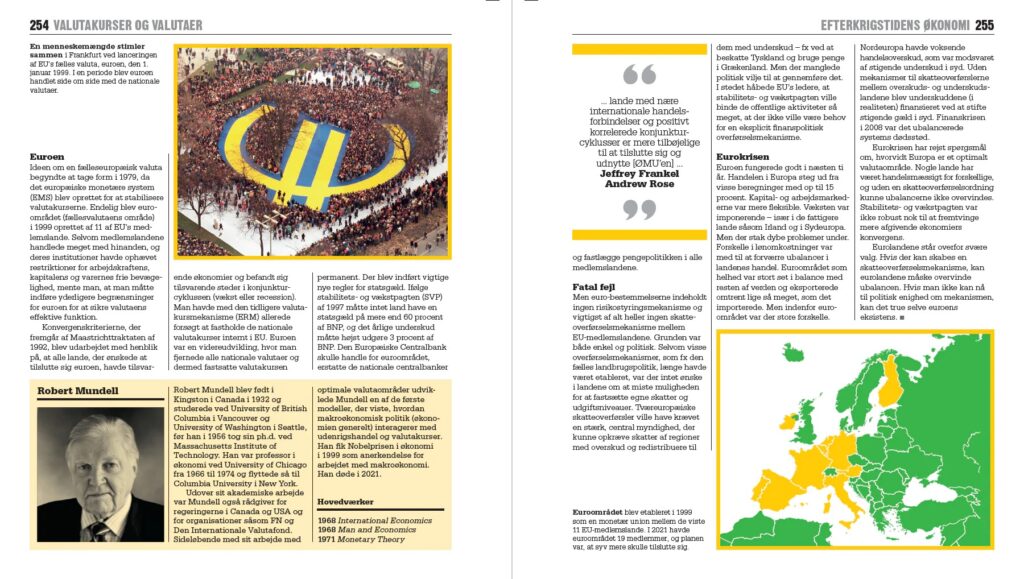
    Økonomisk teori har for mig altid været noget abstrakt og uoverskueligt. Det har fremstået tørt og kedeligt, og som noget utilgængeligt. Det er problematisk, da økonomi er allestedsnærværende og har enorm meget betydning for vores liv.

    Det er her Bogen om økonomi fra Bark kommer ind i billedet. Bogen præsenterer den økonomiske videnskabs idéhistorie på en overskuelig og appetitlig måde, som stimulerer nysgerrighed og reflektion.

    Denne bog er mere end en bog. Det er et stykke kunst; at åbne bogen er som at træde ind i et farverigt museum, hvor man kan fortabe sig i spændende økonomisk teori og historie.

    Ligesom alle bøger fra Bark fra Store ideer-serien, er også denne bog spækket med dragende illustrationer og grafikker, og sproget er meget læsevenligt.

    Bogen kommer omkring problemstillinger og spørgsmål såsom, “hver er en rimelig pris?”, “udbud og efterspørgsel”, “låntagning og gæld”, “hvad er økonomisk liberalisme?”, “socialisme og planlægningsøkonomi”, “økonomi og miljø”, og “finanskriser” – og meget, meget mere!

    Et fint lille særpræg er udvalget af citater, som bidrager til at stimulere refleksion og passende afspejler sidernes indhold. Et eksempel:

    “Universel konkurrence, eller bestræbelserne på altid at producere mere og altid til en lavere pris … har været et farligt system.” (s. 79)

    Jean-Charles Sismondi

    Bogen illustrerer sammenhængen mellem mennesket og økonomi, idet økonomi grundlæggende er en menneskelig aktivitet, hvorfor feltet også i dag ses som en “blødere videnskab”, såsom psykologi, sociologi og politik.

    Bogen om økonomi belyser nogle grundlæggende eksistens- og samfundsvilkår, som påvirker vores tænkning og handlinger, om vi vil det eller ej. For eksempel:

    “Det første, man lærer i økonomi, er knaphed: Der er aldrig nok af noget til at tilfredsstille alle dem, der ønsker det.” (s. 13)

    Thomas Sowell, amerikansk økonom

    En åbenlys sandhed, men ikke desto mindre et vilkår, der strukturerer vores liv og handlinger på måder som vi ikke engang er bevidste om.

    Denne bog er perfekt til dig, som er nysgerrig på økonomisk teori og historie, men som ikke lige kan overskue at åbne en tung, akademisk bog, der kan virke intimiderende. Den er velegnet som en bred introduktion til faget, og som inspiration for videre læsning og fordybelse!

    —-

    Bogen om økonomi er en del af Store Ideer-serien. Læs mere her: Bark

  • Nema čarobnog metka

    Nema čarobnog metka

    Suočavanje s dugotrajnim zdravstvenim problemima — u mom slučaju, teškom nepokretnošću — nemilosrdna je, brutalna stvarnost. Nema brzih rješenja; nema čarobnog metka. Svaki dan je kao Dan mrmota. To je radikalan gubitak kontrole, neumoljivo suočavanje s činjenicom da se svemir i zakoni fizike ne mogu saviti pukom snagom volje; spoznaja da su tvoji krici upućeni noćnom nebu dočekani zaglušujućom tišinom.

    Potrebna je spartanska psiha da se izdrži takav egzistencijalni potres.

    Krivnja i sram često mi dolaze u posjetu i progone me: „Zašto sam to učinio?“ „Zašto nisam učinio ono?“ „Ja sam neuspjeh.“ „Da sam barem učinio ovo ili ono…“

    S vremenom sam, međutim, naučio pružiti sebi milost. To znači prihvatiti da su moje emocije valjane reakcije na nevjerovatno tešku situaciju. Da sam u redu — i da razlog što sam i dalje zaglavljen u noćnoj mori nije taj što sam slomljen, nego to što su izgledi od samog početka bili protiv mene, jer su mnoge stvari u konačnici bile izvan moje kontrole.

    Što, pretpostavljam, odražava život općenito.

    Pouka je, dakle, razvijati sposobnost puštanja.

    ———

    Podijelit ću nešto čemu se često vraćam u mislima. Šest sedmica nakon operacije trebalo je da stanem na nogu punom, ili gotovo punom, težinom tijela. Nisam mogao. Nešto je pošlo po zlu s mojom nogom u prethodnim sedmicama, zaustavivši očekivani napredak prije šeste sedmice.

    Bio sam u bolnici na kontroli u šestoj sedmici i radi daljnjih uputa za fizioterapiju. Žena koja me je pregledala bila je pomalo šokirana mojim nedostatkom napretka. Mogao sam stati s 10–15 kilograma umjesto 75. Nisam se osjećao fizički sigurno da učinim više, jer sam već imao problema prethodnih sedmica i nisam dostizao ni manja očekivana postignuća.

    Cijela situacija — spoznaja da zaostajem — naglo mi je povećala tjeskobu oko budućnosti. Zapravo se nisam bojao koristiti nogu; jednostavno sam osjećao jasan signal iz tijela da ne pretjerujem.

    Ono što je tada rekla, vjerujem, promijenilo je tok mog oporavka:

    „Ako ne staneš na nogu, nećeš moći hodati.“

    To mi je još više povećalo tjeskobu i učinilo da se osjećam duboko nelagodno. Šta sam učinio kad sam došao kući? Čitav sat sam se prisiljavao da stojim na nozi s velikom težinom, istovremeno istežući tetivu.

    Nedugo nakon što sam legao da se odmorim, počeo sam osjećati izuzetno jaku bol, što je dovelo do potpune nepokretnosti noge i zgloba puna tri dana. To je lošu situaciju učinilo višestruko gorom.

    Volio bih da je komunicirala drugačije, i volio bih da nisam paničario. Ipak, gledajući realno, danas razumijem zašto sam tako reagirao, što mi pomaže da sebi pružim onu prijeko potrebnu milost.

  • No Magic Bullet

    No Magic Bullet

    Early phase

    Facing long-term health issues — in my case, severe immobility — is a merciless, brutal reality. There are no quick fixes; there is no magic bullet. Every day is Groundhog Day. It is a radical loss of control, an unforgiving and painful realization that the universe and the laws of physics cannot be bent by sheer will; the recognition that your cries into the night sky are met with a deadening silence.

    It requires a Spartan psyche to weather such an existential earthquake.

    Guilt and shame visit and haunt me frequently: “Why did I do this?” “Why didn’t I do that?” “I’m a failure.” “If I had just done this or that…”

    With time, however, I’ve learned to give myself grace. That means accepting that my emotions, thoughts and actions are valid responses to an incredibly challenging situation. That I’m okay — and that the reason I’m still stuck in a nightmarish reality isn’t because I’m broken, but because the odds were stacked against me from the beginning, because many things were ultimately out of my control.

    Which, I guess, reflects life in general.

    The lesson is thus to cultivate the ability to let go.

    ———

    I will share something that I often return to in my mind. Six weeks after my achilles tendon surgery, I was supposed to step on my leg with full, or close to full, body weight. I couldn’t do it. Something had gone wrong with my leg in the prior weeks, halting the expected progress before week six.

    I was at the hospital for a checkup at week six and for further physiotherapy guidance. The woman seeing me was a bit shocked by my lack of progress. I was able to step with 10–15 kilos instead of 75. I wasn’t physically comfortable doing more, as I’d already had issues the weeks before and wasn’t meeting even the smaller expected milestones.

    The whole situation — realizing I was underperforming — spiked my anxiety about the future. I wasn’t actually afraid of using my leg; I just felt a clear signal from my body telling me not to overdo it.

    What she then said, I believe, changed the course of my recovery:

    “If you don’t step on your leg, you will not be able to walk.”

    This spiked my anxiety even further and made me deeply uncomfortable. While objectively true, she didn’t meet me where I was, neither physically nor mentally, with that message.

    What did I do when I got home? For a whole hour, on and off, I pressured myself to stand on the leg with a lot of weight, stretching the achilles tendon simultaneously. Her words lingered in my mind. I felt my future was at risk. Inadvertently, in trying to prevent the worst-case scenario, I helped usher it in.

    Not long after I lay down to rest, I began feeling extremely intense pain, which led to complete immobilization of the leg and ankle for three whole days. The slightest ankle movement would flare up the overwhelming pain these days, and made my achilles tendon very sensitive onwards. This made a bad situation many times worse.

    I wish she had communicated differently, and I wish I hadn’t panicked. Yet, being realistic, I understand today why I did, which helps me give myself that much needed grace.

  • An American Childhood


    Figure 1. Still from Rocky (1976) as reproduced in Philly Magazine, 26 April 2014

    I grew up in your world, on the other side of the Atlantic.
    A mythical universe of stars and stripes.
    I absorbed you through flickering screens,
    through music, art, and literature.

    You taught me about grit, striving, ambition.
    About pulling myself up by the bootstraps.
    About the strength and liberty of the individual and the pursuit of happiness.
    You taught me to stand up for myself and others.

    You were far away,
    yet so close.
    I was just a child,
    impersonating American movie heroes,
    feeling I could win the future,
    feeling I could pluck the stars
    from the night sky.

    Though, I was just a child.
    Unaware of carpet bombing and
    regime changes.
    Unaware of internment camps and
    racial segregation.
    Unaware of immature ideas of liberty,
    of hypocrisy and greed and
    of snakes in your garden.

    “There was once a dream that was [America]. You could only whisper it. Anything more than a whisper and it would vanish, it was so fragile.”

    Your shortcomings are vast and consequential.
    Though in all fairness, dare I say, not unique.
    The ideals you gave birth to, however inadequately realized, however misused and perverted by soulless men, represent and aim to bring out
    the better angels of our nature.

    Your ideals issued a new world,
    of revolutionary courage and hope.
    Of resistance and an untamed
    will of the people.
    You became the North Star,
    shining a light on what is possible,
    when we are united and guided by virtue.

  • United States of Trump

    United States of Trump

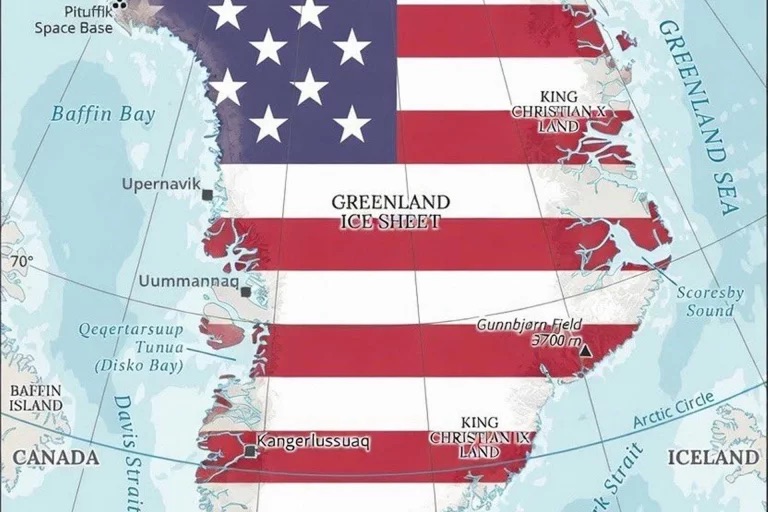
    I’ve been listening to Danish politicians and political commentators lately, and my sense is that some of them are naive when it comes to the aspiring king, Donald Trump. They are analysing the Trump-Greenland issue using the wrong framework.

    When asked whether Trump would use military force to take over Greenland, they say no, because it would not be rational. And I agree: it would not be rational for several reasons. Not least because the United States already has the right, under existing agreements, to install as much military infrastructure in Greenland as it wants for security reasons. It can also invest in mineral extraction. Another reason is NATO: a military intervention would seriously risk destroying the alliance. All in all, a military move would be costly and unnecessary.

    However, Trump is not your run-of-the-mill rational actor – if he is one at all. I believe he cares only about himself and his family. He cares about power, status, and enriching himself and those closest to him. Because of this, Greenland is primarily a vanity, money, and machismo project. That is why Trump, I believe, will keep insisting on Greenland despite the fact that it is irrational – and why he may even be willing to use military force.

    Greenland is not about American interests; it is about Trump’s interests.

    It appears that Nicolás Maduro, after significant pressure, was in fact willing to acquiesce and make a deal with Trump. Yet Trump still went ahead and abducted him. That speaks volumes about Trump’s priorities and interests. Consider the following:

    “Venezuelan President Nicolás Maduro has said he is open to negotiating with Washington to combat drug trafficking in the first sign that sustained U.S. pressure is taking its toll on the embattled South American leader.

    …

    ‘If they want oil, Venezuela is ready for U.S. investment, like with Chevron, whenever they want it, wherever they want it and however they want it,’ he said.” (1)

    Would Trump accept any deal Denmark might be ready to make? I am doubtful, though I certainly hope so. Perhaps all of this is overblown – by me and by many others. And of course, it is important to acknowledge that Greenland and Venezuela are very different cases. But how much does that matter if we conclude that Trump is not a rational actor?

    Here is an excerpt from an article that lends support to the ideas above:

    “The American incursion into Venezuela has caused a lot of people to say the U.S. is going back to the age of great power spheres of influence, where big countries threw their weight around and divvied up the world. But two months ago, you published a scholarly paper saying this might not be the perfect comparison. How do you describe this new American dynamic you call “neo-royalism”?

    Goddard: The idea of great power competition and spheres of influence, the traditional way of understanding that era, actually doesn’t make sense of what’s happening now. We understand there’s all this stuff about the “Donroe Doctrine” and this Western hemispheric stance. But why it doesn’t make sense is that a lot of the moves that you’re actually seeing the Trump administration make aren’t necessary. They’re costly, and they undermine United States security.

    Let me take the more recent example of Greenland. The United States already has a sphere of influence in Greenland. It can have any base it wants. Denmark has promised more influence on what is going on there. And what we argue is this has less to do with increasing spheres of influence or competing with great powers, and more to do with a Trump administration and a small clique of insiders who see themselves as exceptional and are basically demonstrating their dominance over subordinate territories. And if you understand that this is really designed to make a select group powerful, rather than the United States as a whole, it makes a lot more sense.

    ……

    Goddard: No. There isn’t such a thing as national interest. That’s in some ways the most straightforward answer. And I think, too, that this is also different than, say, the autocracy-versus-democracy framework that a lot of people have been running with. In the 19th century, even if we’re talking about big names like Bismarck, we’re still talking about a national state that was interested in mobilization. It built bureaucracies, standing professional militaries,professional diplomatic corps. So there was all of this infrastructure in the state in order to accomplish this mobilization, both at home and abroad. And what we’re seeing here is not only the lack of a national interest, but a move from mobilization to the processes of extraction. It doesn’t really matter if you’re doing something to harness the power of the state. What matters is if you’re finding those resources to feed those clique interests.

    ……

    These are more a group of actors who see a moment to create oligopolistic power. And so you’re seeing the tech companies, many of them, at the center of this. And one of the things that Stacie and I are very concerned about is the spillover of those economic actors willing to legitimize and play in this domain. These are actors who are acclimating themselves to this order and this way of business. Right now, this order is not yet consolidated, but the more these economic actors widen, the harder it will be to reverse.”(2)

    1: https://www.nbcnews.com/news/amp/rcna251882

    2: https://www.politico.com/news/magazine/2026/01/07/venezuela-royalism-donald-trump-00713276